 Deutsch
  English
  Francais
  Italiano
 Hereditary hair loss (androgenetic alopecia)
Hereditary hair loss (androgenetic alopecia) is the most common form of hair loss in men and women. The first signs often appear gradually—for example, as receding hairlines, a monk’s tonsure, or thinning at the part. On this page, you can learn more about the causes, progression, and possible treatments for hereditary hair loss.
How common is hereditary hair loss?
Many people develop signs of androgenetic alopecia over the course of their lives—to varying degrees and at different rates.
Hereditary hair loss affects men more frequently and usually at an earlier age than women. Men are often affected as early as young adulthood. Women are also frequently affected, though often later in life and with diffuse thinning at the crown. The incidence among women increases significantly, particularly after menopause.
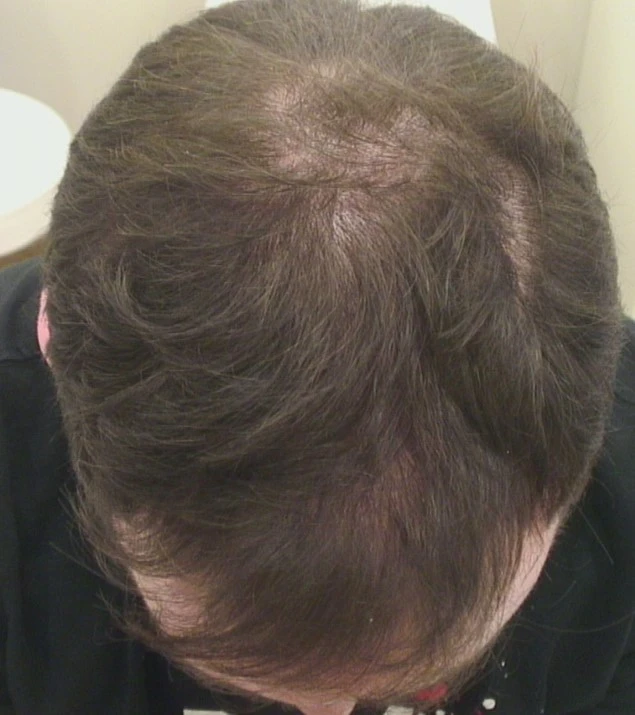
What causes hereditary hair loss?
Genetic factors are the primary cause of hereditary hair loss. It is not the hair loss itself that is inherited, but rather the hair follicles’ hypersensitivity to DHT, a metabolite of testosterone.
This predisposition can be passed down through generations and affects both women and men. It does not necessarily have to come directly from the parents but can also “skip a generation” within the family. The severity and age of onset of hair loss vary from person to person.
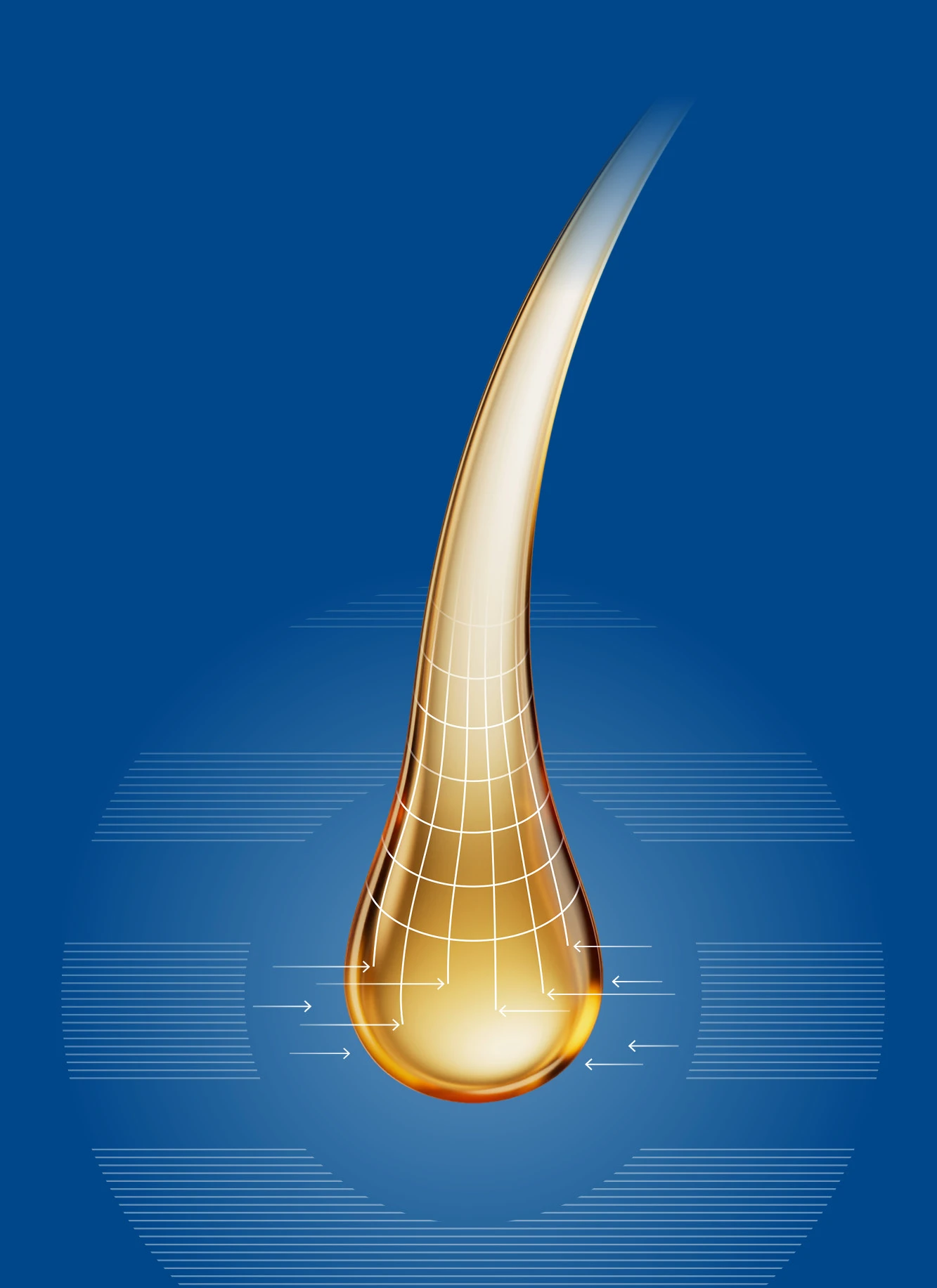
Miniaturization of hair follicles
In cases of hereditary hair loss, the hair follicles gradually shrink. This process is called “miniaturization.” As a result, the hair grows back thinner, finer, and shorter. Often, only thinning patches or vellus hair appear at first. As the shrinkage progresses, the hair follicle eventually can no longer produce visible hair. Therefore, the earlier treatment begins, the better existing hair follicles can be supported.
How quickly does hereditary hair loss progress?
Hereditary hair loss usually progresses slowly and gradually. The rate at which it progresses varies from person to person and depends on genetic predisposition, hormonal factors, and the condition of the hair follicles.
Often, the condition goes unnoticed for a long time until visible thinning occurs. Since hair follicles shrink over time, the earlier you take action, the better you can preserve your hair and its health in the long term.
Typical progression in men and women
In men, hereditary hair loss often begins with receding hairlines and a crown, eventually leading to baldness. In women, it usually manifests as diffuse thinning along the part, while the hairline often remains intact. Complete baldness is rare in women. Hormonal changes, such as those during menopause, can further exacerbate the condition.

Typical course in men

Typical Course in Women
Early signs of hereditary hair loss
In men, the first signs often appear as receding hairlines, a crown, or thinning hair on the top of the head. Women usually notice increasing thinning along the part or a general loss of volume. Often, the hair appears finer or weaker, or the scalp becomes more visible. An increase in vellus hair can also be a sign of early hair follicle miniaturization.
How is hereditary hair loss diagnosed?
Reflected-light microscopy and TrichoScan are important diagnostic methods for assessing hair loss. Reflected-light microscopy makes it possible to visualize hair follicles, hair thickness, and typical changes. TrichoScan complements this with digital measurements of hair density, growth, and hair loss. Both methods help in the diagnosis of hereditary

What factors influence the progression of hereditary hair loss?
The progression of hereditary hair loss is primarily influenced by genetic predisposition. In addition, hormones, age, menopause, stress, medical conditions, medications, and the overall health of the hair follicles play a role. External factors such as infections or nutritional deficiencies can also exacerbate hair loss. The rate at which hair follicles shrink and the extent to which hair thins vary from person to person.
Why early action is crucial
Early intervention is important because, in cases of hereditary hair loss, hair follicles shrink over time. The more advanced this process becomes, the more difficult it is to maintain healthy hair growth or stimulate it again. If action is taken early on, existing hair follicles can be better supported, and the progression of thinning can often be significantly slowed.
The use of Thymuskin for hereditary hair loss
Innovative GKL–02 Thymic Peptide Complex
Thymuskin contains the patented active ingredient GKL–02 Thymic Peptide Complex. Thymuskin’s biological activity is primarily evident in its ability to activate hair cells (keratinocytes), which play a crucial role in hair growth. Hair growth is stimulated.
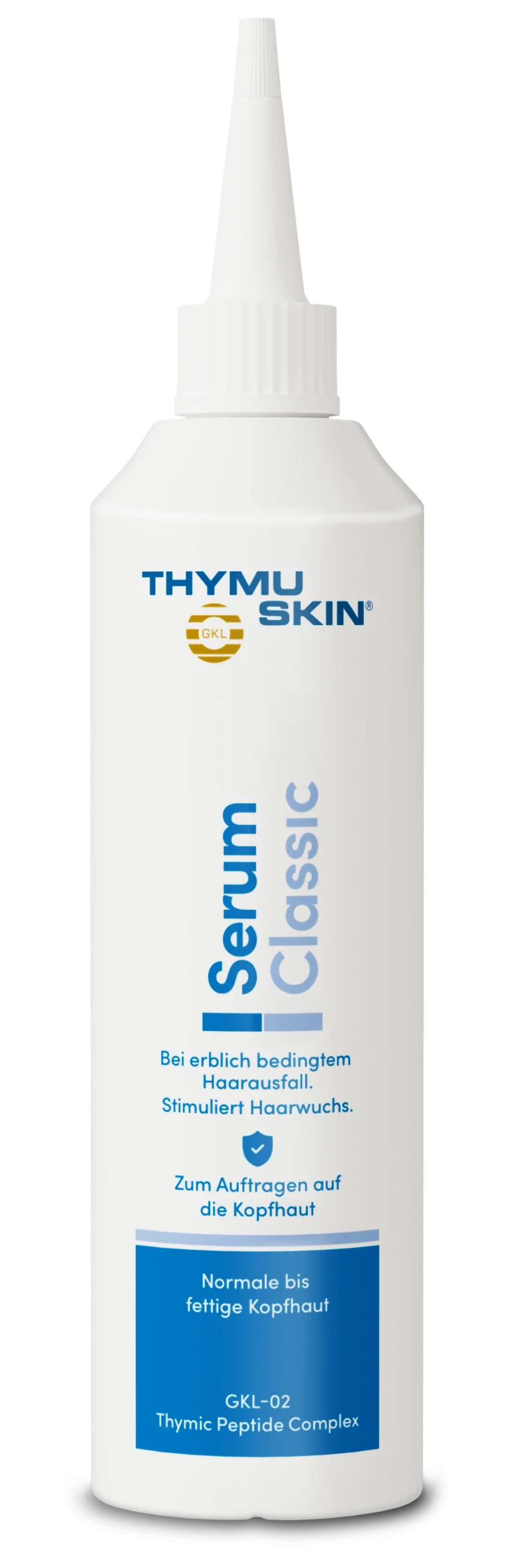
THYMUSKIN® Classic
For hereditary hair loss, we recommend using Thymuskin Classic Serum in combination with the Thymuskin shampoo suited to your hair type. The shampoo cleanses the scalp and prepares it for the serum application. Next, apply the Classic Serum directly to the scalp and massage it in. The key to success is daily and consistent use.
Our customers' experiences
Treatment Course When Using THYMUSKIN®
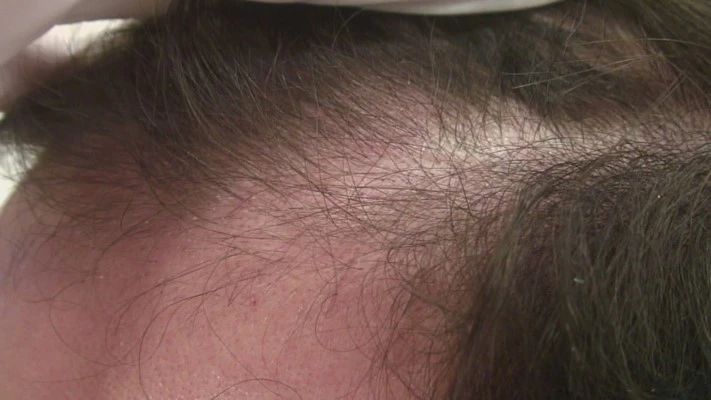
Previously **
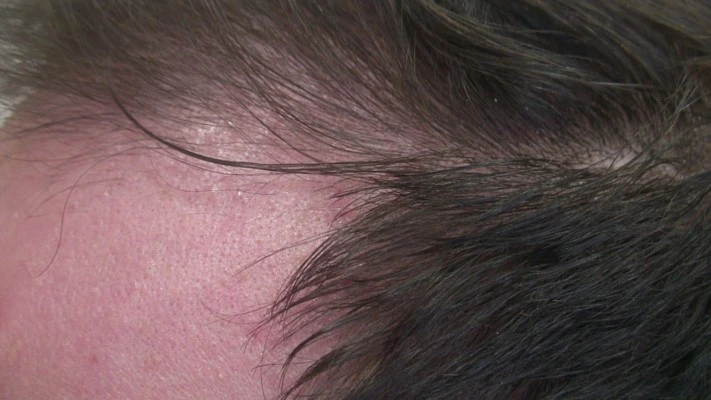
Later **
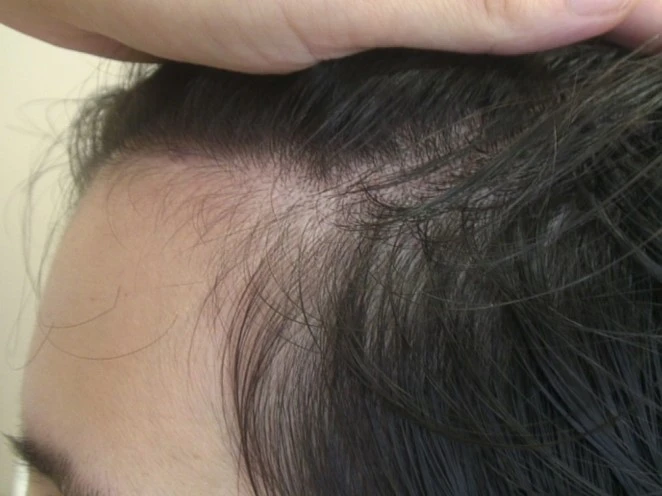
Previously **
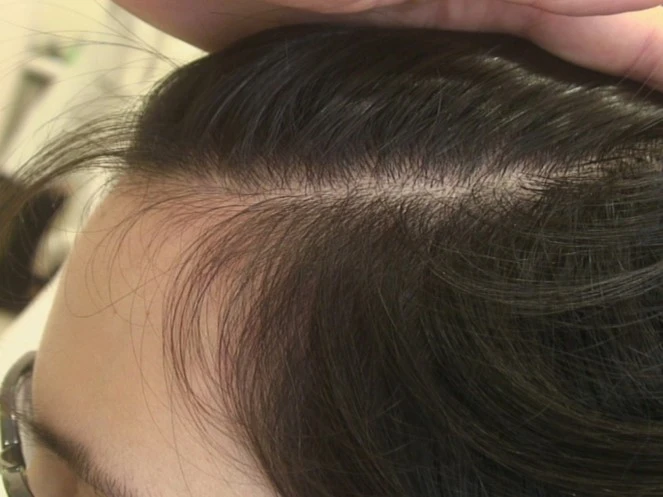
Later **
94%
Among male test subjects in the early stages, the pull test showed a 94% improvement.*
98%
Among female testers in the early stages, the pull test showed a 98% improvement.*
Results of clinical trials
Multicenter study
A multicenter study* examined the efficacy and tolerability of Thymuskin Classic (serum and shampoo) in 184 women and 57 men over a period of 6 months.
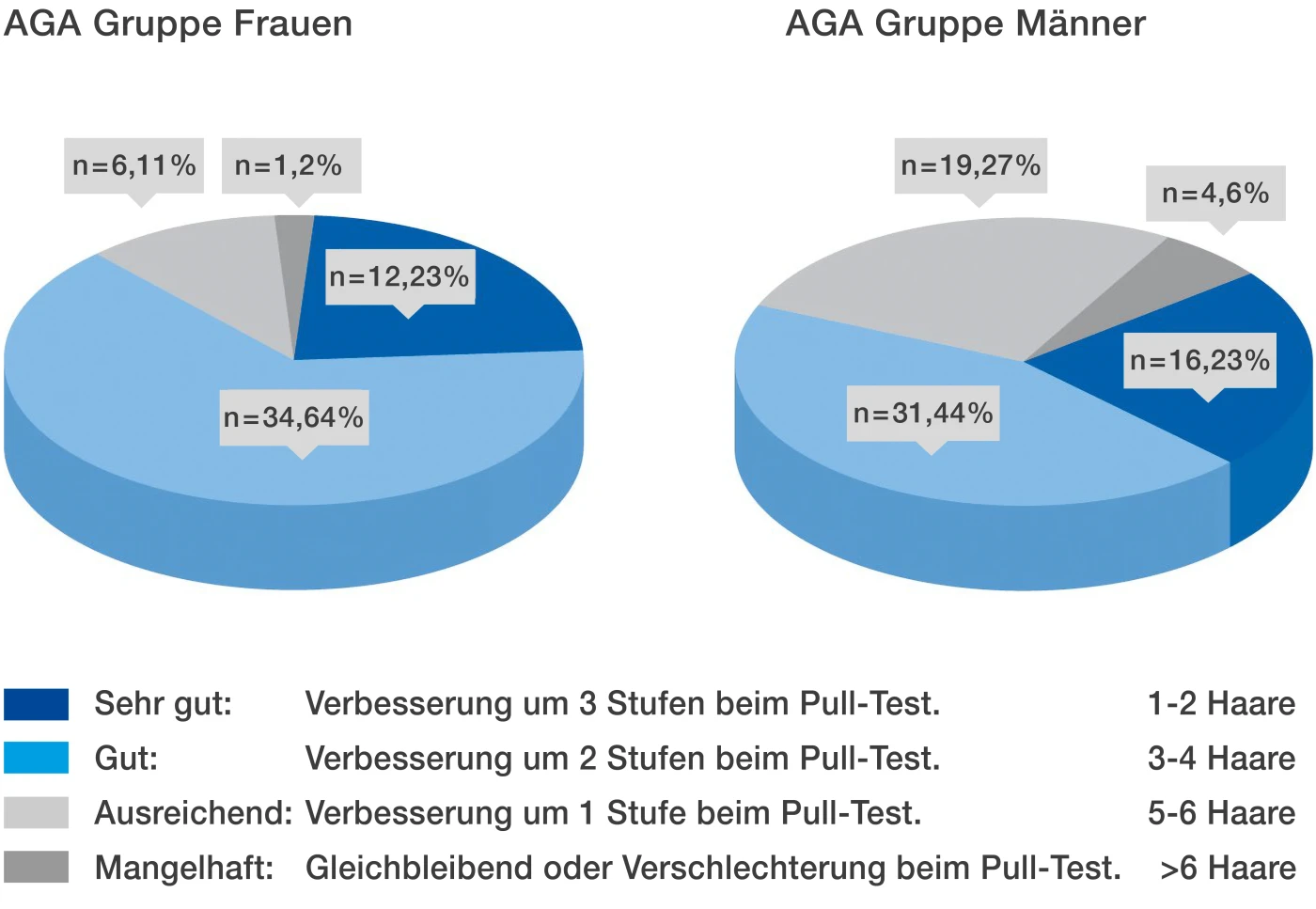
* Barbareschi M. et al.: A multicenter study on the efficacy of a serum and a shampoo for topical application containing nature-identical thymus peptides for the treatment of androgenetic alopecia and chronic telogen effluvium in women and men. Published in 2013 in the Journal of Plastic Dermatology (Issue 9, 2013 · ISSN 2035-0686)
** Dr. Panoutsopoulou, Greece, 2020
FAQs on hereditary hair loss
Genetically determined hair loss can start early. In men it typically starts with the progression of a receding hairline, while women notice it as their hair becomes thinner in the area of their parting. If used in good time, Thymuskin can halt the progre...
What does genetic hair loss mean for young men (early stages)?
In the early stages, receding hairlines and gradual thinning of the hair on the top of the head become apparent. This is caused by a genetic hypersensitivity of the hair follicles to DHT. The hair becomes finer, shorter, and falls out more quickly. In the ...
I am a man and already have advanced genetic hair loss. What can I do?
Advanced genetic hair loss is caused by a hereditary hypersensitivity of the hair follicles to DHT. Typical characteristics are distinct receding hairline, thinning at the top of the head/tonsure and increasingly thinning hair as the hair follicles shrink ...
Good to know

From cigarettes to bald spots
The latest research results suggest that there could be another motivation to keep your hands off the cigarette.
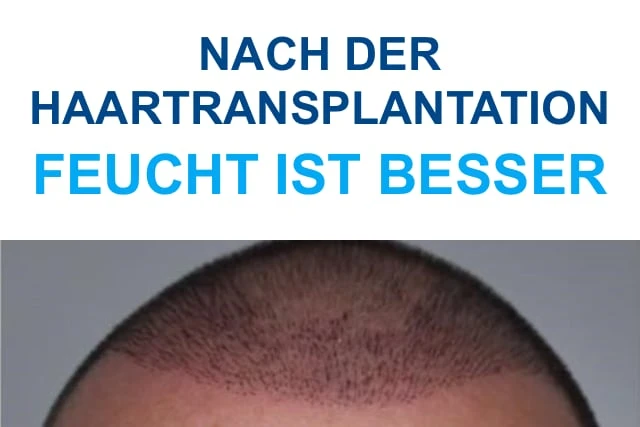
THYMUSKIN Hydro Gel
The right care after the hair transplant determines whether the hair grows well.